
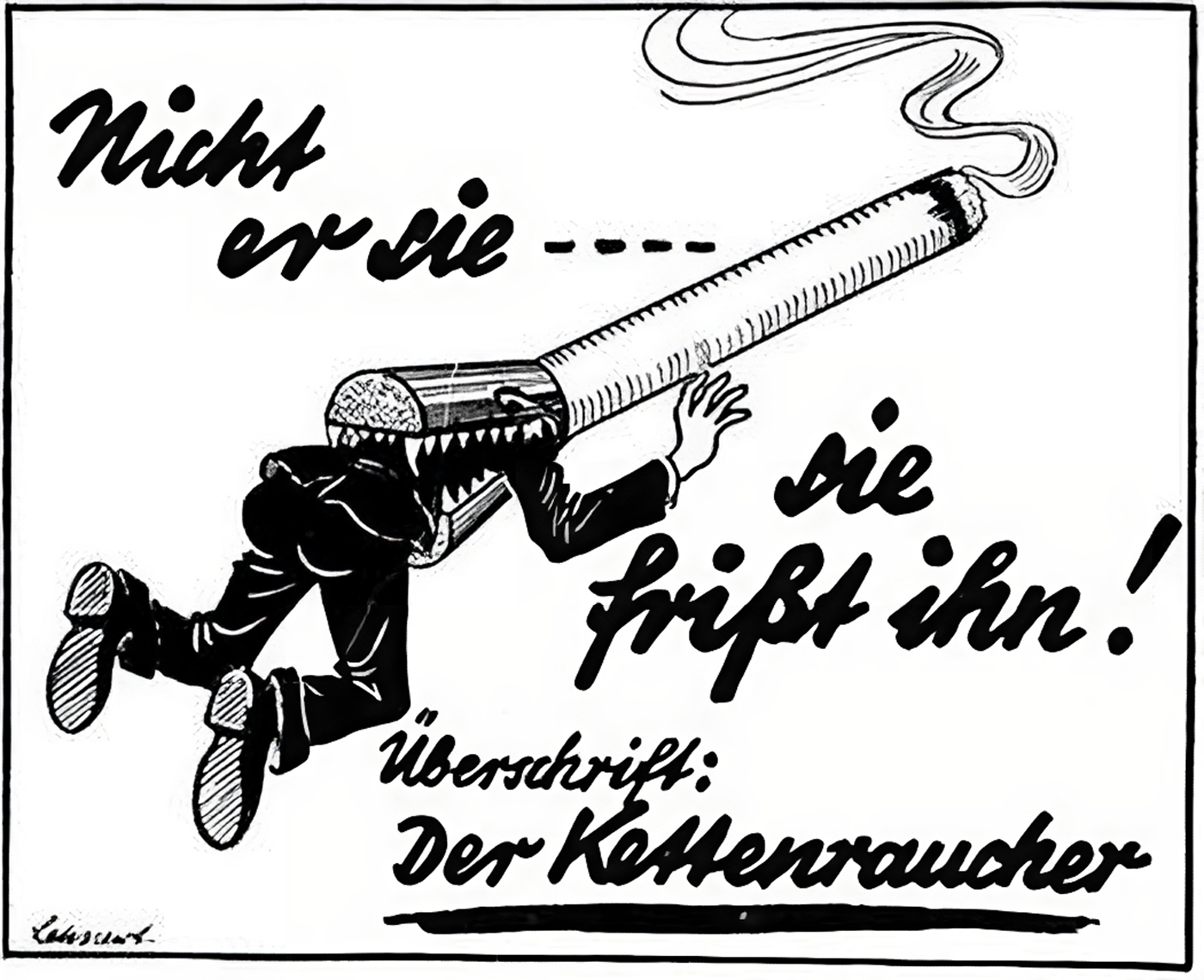
When we speak of Adolf Hitler and the Nazis, there’s a certain smoke and fog that tends to cloud our perception. This smoke, however, has less to do with the rumblings of war machines, and more to do with the surprising reality of Nazi Germany’s stance on tobacco consumption. Among the countless horrors and atrocities committed during the Holocaust, nestled in the dark pages of history, there’s an unexpected anti-smoking movement.
Waging War Against The Tobacco Cloud
It’s odd to imagine, isn’t it? Hitler, arguably one of the most reviled figures in history, espousing a public health campaign in the midst of perpetrating human rights abuses on a horrific scale. But, let’s brush away the ash of our preconceived notions for a moment and journey back to the 1930s and 40s.
Hitler, a man whose personal habits would be under the microscope given his position, was, indeed, a vehement non-smoker. He found the habit ‘decadent’ and was often seen reprimanding his close associates if they dared to light up around him. This personal vendetta against smoking took on a more public shape as the Nazis ascended to power. They launched one of the most robust anti-smoking movements of the 20th century, long before any comparable efforts were seen elsewhere in the world.
A Forewarning Cloud of Smoke
Drifting deeper into the era, one cannot ignore the air of scientific curiosity and advancement that was, in part, a product of the Nazi regime. German scientists were among the first to establish a strong link between tobacco use and lung cancer. This discovery, coupled with the Fuhrer’s personal disdain for the habit, led to a wave of stringent tobacco control measures.
State-sponsored anti-smoking campaigns were launched, including advertisements and educational programs warning about the hazards of tobacco. Research was intensified, and the findings were disseminated widely, not only to doctors but to the general populace as well.
Smoking was banned in many public places, including trams, buses, and city trains. Restrictions were placed on advertising tobacco products, particularly in ways that could appeal to the youth. Moreover, the Nazis initiated a hefty tobacco tax and made efforts to limit tobacco rations for women and “Aryan” youth, motivated by their warped notions of racial and reproductive purity.
An Unholy Alliance of Health and Horror
Yet, as we stroll through this forest of seemingly progressive health initiatives, the undergrowth holds something more sinister. These campaigns were not born out of pure public health altruism; rather, they were rooted in a toxic ideology of racial purity and Aryan superiority. It was a bizarre blend of health consciousness and eugenic intent.
The Nazis viewed tobacco as a genetic poison, something that could tarnish the ‘pure’ Aryan race they sought to create. Their anti-smoking campaign, while it did seek to improve public health, was also a tool for the propagation of their pernicious racial ideology.
It’s a twisted irony, a chilling winter morning that forces us to wrap ourselves in the cloak of historical understanding, staring at a sky simultaneously lit by the dawn of public health awareness and darkened by the atrocities of a genocidal regime.
Smoke and Mirrors
So, we find ourselves back in the present, awash in a different kind of smoke, that of information overload and historical hindsight. The Nazi anti-smoking campaign, paradoxical as it may seem, is an essential part of our understanding of the era. It serves as a reminder of how progressive initiatives can be co-opted for sinister purposes, a harsh lesson that’s more relevant today than ever before.
We ought to remember that even the most monstrous figures in history were not one-dimensional. Hitler’s anti-smoking campaign was an aspect of his rule that runs counter to our expectations, underscoring the complex, often disturbing interplay of health, politics, and ideology.
Let’s hold on to that thought, a single spark against the backdrop of our shared past, a glowing ember of complexity amidst the darkness of dictatorship. As we leave this smoky battlefield of morality and history, we understand better the adage: ‘There’s no smoke without fire.’ Even in the darkest corners of history, the light of curiosity can still illuminate unexpected facets, if only we’re brave enough to explore.